Quality Control
How to Inspect Marble Before Shipping: Quality-Control Checklist for Importers
A pre-shipment checklist for marble importers: what to confirm on material, dimensions, finish, colour range, fabrication, defects, piece identification, packing and documents before stone is loaded.
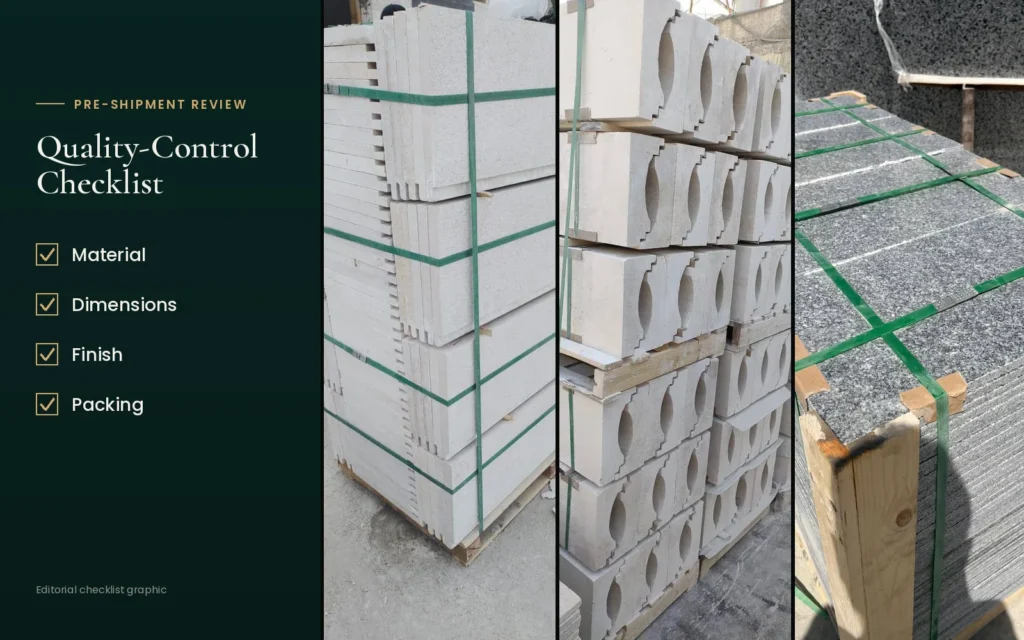
Once natural stone is crated and loaded into a container, correcting a problem becomes slow and expensive. A pre-shipment inspection is the last practical point at which buyer and supplier can confirm that the order matches what was agreed. This checklist sets out what importers and project buyers typically review before marble is packed and shipped. It does not replace your contract or project specification: the agreed specification is always the reference, and natural stone should be judged against an agreed range rather than against a single “perfect” piece.
Why Marble Inspection Before Shipping Matters
Marble is cut from quarried blocks, and every block is different. As Beacon Capital’s Factory & Quality page puts it, colour, fossils, veins and movement may vary between blocks and production batches. An inspection is therefore not a test of whether every piece looks identical. It is a check of three things:
- The right material and specification: the stone, dimensions, thickness, finish and fabrication that were ordered.
- The agreed appearance range: colour and pattern within the range that was approved, not outside it.
- Condition: no damage or processing faults that should not leave the factory.
Natural variation is not a defect by default. It becomes a problem only when it falls outside what was agreed, which is why the approval method needs to be settled before production starts, not at the loading bay.
A buyer’s inspection also sits alongside the supplier’s own checks rather than replacing them. On the Factory & Quality page, Beacon Capital describes quality control integrated throughout production, covering dimensional accuracy, thickness control, surface-finish inspection, visual consistency and packing verification. Decide early how you will take part: in person, through an inspector you appoint, or by reviewing photographs and records of the actual material before it is closed into crates.
1. Confirm the Approved Material
Start with identity. Every later check assumes the stone is the one that was ordered.
- Stone name: the material on the crates, labels and packing list matches the order. Similar-looking stones can be different materials in a catalogue, so check names exactly.
- Approved reference or sample: the reference used to approve the order is available for comparison during the inspection.
- General colour range: the pieces fall within the colour range of the reference, bearing in mind that a small sample cannot show everything a large quantity will contain.
- Veining and pattern: the amount of movement, fossil detail or veining matches what was expected for the stone.
- Batch consistency: if the project required material to be kept to one production selection, or grouped by tone for different areas, check that this was done.
If you are still comparing materials, our guide to Egyptian marble types explains how the colour families differ, and each stone in the Egyptian Marble Collection has its own page with finishes and applications.
2. Check Dimensions and Thickness
Measure a representative number of pieces from each item, not just the first crate.
- Length and width against the order or the cut list.
- Thickness, measured at several points on each piece checked, particularly for tiles and cladding panels that will be laid or fixed side by side.
- Squareness, by comparing diagonals, where the specification calls for it.
- Cut-to-size pieces against the approved drawing or schedule, item by item.
Check against tolerances only where they were agreed in writing. This article deliberately does not quote tolerance values, because they depend on the product, the finish and the specification agreed for each order. Where a project specification refers to a product standard, that standard sets the reference. In Europe, for example, EN 12058 covers natural stone slabs for floors and stairs, and related standards in the same series cover modular tiles (EN 12057) and cladding slabs (EN 1469).
3. Inspect Surface Finish
Confirm that each item has the finish that was ordered: polished, honed, brushed or another agreed finish. Our marble finishes guide explains how each one should look.
- Finish type: correct for each item, especially where one order mixes finishes, such as polished walls and honed floors.
- Visual consistency: the gloss of a polished surface or the matt appearance of a honed one is even across pieces of the same item.
- Surface appearance: where pores or fossil detail are part of the stone’s character, the surface looks as it did on the approved sample.
- Processing faults: patches where the finish is incomplete, visible scratches or marks from processing, or uneven texture on a textured finish.
Inspect in good, even light. Looking along the surface at a low angle makes scratches and finish differences easier to see than looking straight down.
4. Review Colour and Natural Variation
Colour is judged best on a group of pieces laid out together, not piece by piece. Laying out a selection of tiles or panels shows how the material will read once installed and makes an out-of-range piece easier to spot.
- Natural variation: expected in marble. The question is whether it stays within the approved range.
- Batch selection: larger orders may be drawn from more than one block. Ask how the material for your order was selected, and whether pieces were sorted by tone for different areas.
- Visual approval: agree who approves the selection and on what basis. That may be a reference sample, photographs of the actual selected material, or an inspection visit.
Photographs are useful for checking pattern and consistency, but screens and lighting change how colour appears. For colour-critical projects, compare against the physical reference. No inspection can make natural stone uniform, and a supplier cannot promise identical pieces. What an inspection can do is confirm that the selection matches what was agreed.
5. Check Edges and Fabrication
Fabricated elements need a closer look, because a small error on a drawing-based piece usually cannot be corrected on site.
- Cut-to-size dimensions: each piece against its reference on the drawing or cutting schedule.
- Edge details: the specified profile, such as bullnose, bevelled or mitred, is consistent along the length of the piece.
- Openings and cutouts: basin, tap and other cutouts are positioned to the approved templates or drawings.
- Stair pieces: treads, risers and landings match the drawings, including nosing profiles and any anti-slip grooving that was specified.
- Vanity and countertop fabrication: tops, backsplashes and side returns are present and match the layout.
Beacon Capital’s custom stone fabrication work is produced to approved drawings, so the approved drawing is also the inspection reference for these items.
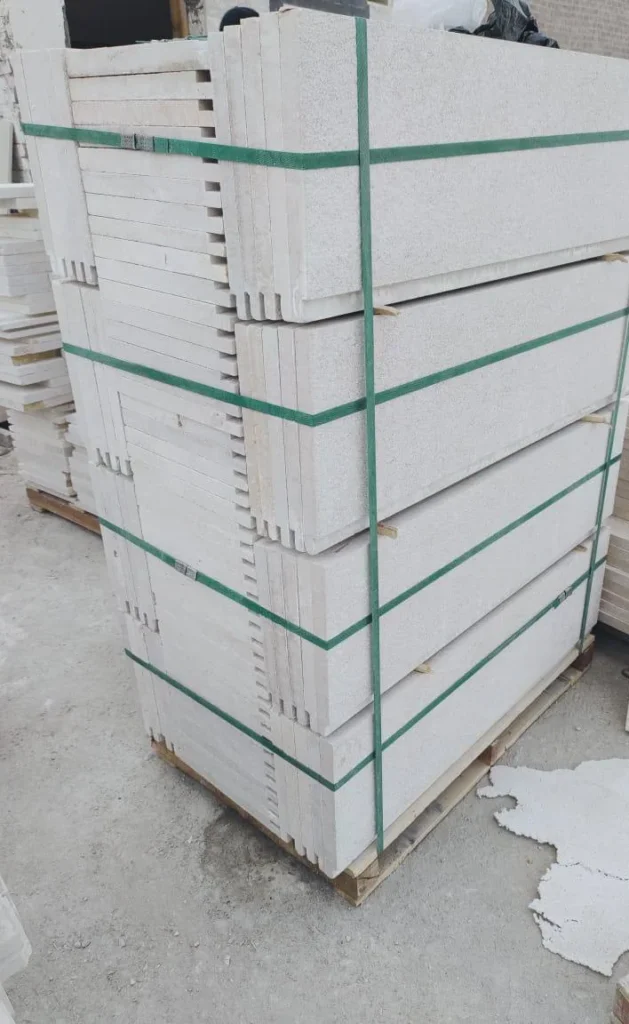
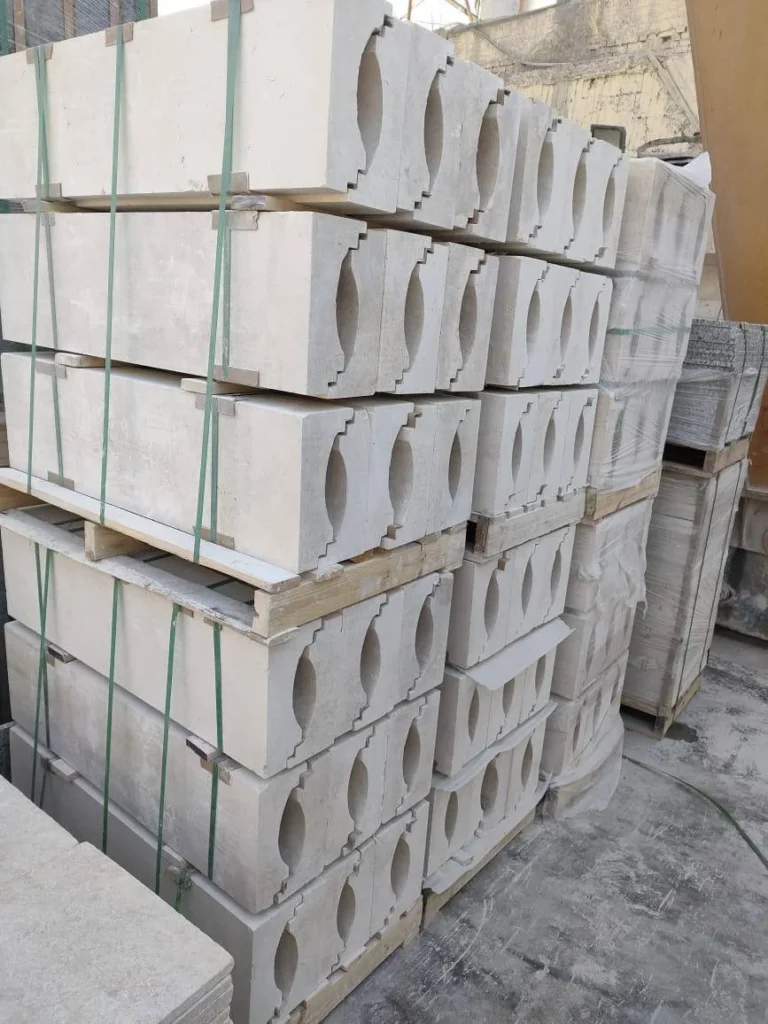
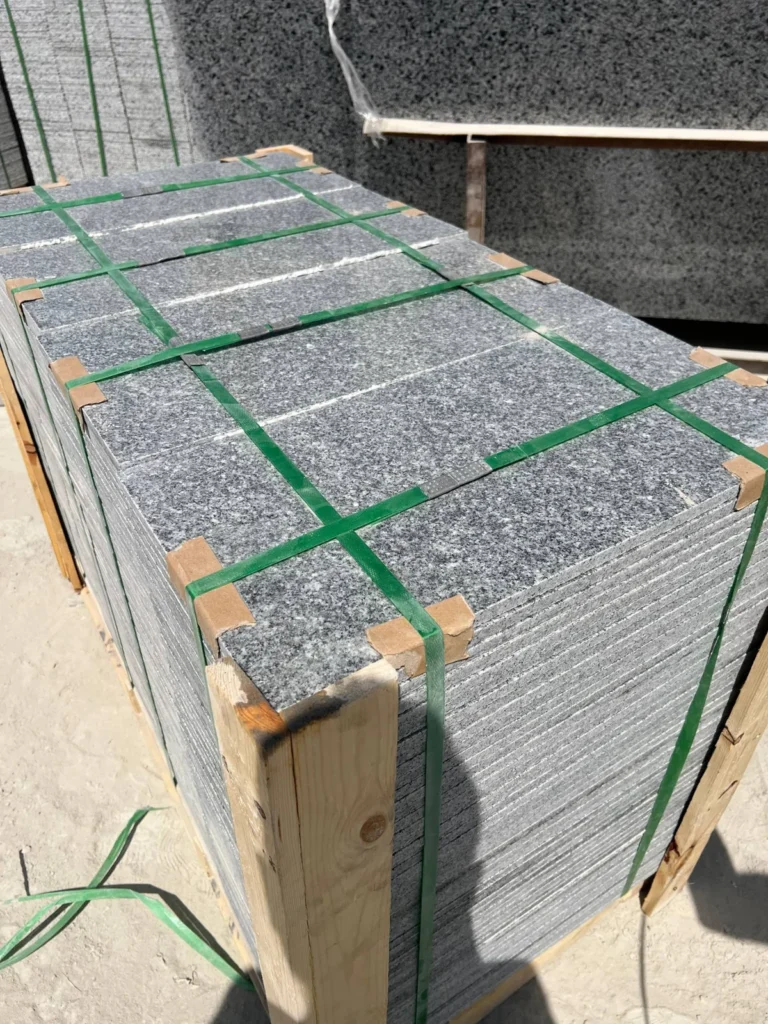
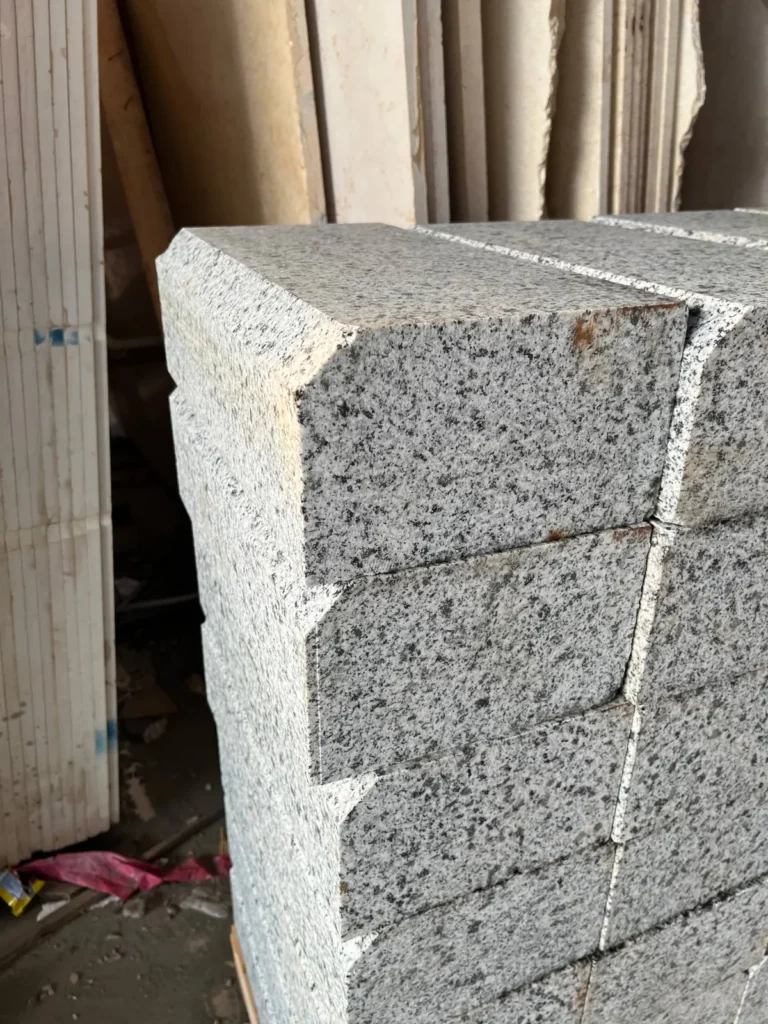
6. Check Visible Defects
The aim here is to separate natural features of the stone from faults caused by processing or handling.
| Observation | Usually | What to do |
|---|---|---|
| Veins, fossils, colour movement | Natural character of the stone | Compare with the approved range |
| Natural pores or pitting similar to the sample | Natural character | Compare with the approved sample |
| Chips on edges or corners | Processing or handling damage | Replace or re-cut, as agreed |
| A line that opens, or can be felt as a separation | Possible crack | Set aside and ask for an explanation |
| Saw marks or scratches on a finished face | Processing fault | Re-finish or replace, as agreed |
| Broken or cracked pieces | Damage | Remove from the shipment |
A natural vein is usually part of a smooth, continuous surface. If a line can be felt as a separation, or continues through an edge, set the piece aside and ask the supplier to explain it before it is packed. Agree in advance what happens to rejected pieces: replacement, re-cutting, or acceptance at an adjusted price.
A pre-shipment inspection can only cover the condition of the stone before loading. Damage that happens in transit is recorded on arrival and is a separate matter. How transit risk is handled depends on your contract and delivery term.
7. Verify Quantity and Piece Identification
- Piece count per item, and the total area or length, against the order and the packing list.
- Labels showing the material, dimensions, finish and item reference.
- Project references, such as the floor, area or elevation where a piece will be installed.
- Drawing references, so each fabricated piece can be matched to its drawing on site.
- Extra material, if you ordered an allowance for cutting or future repairs, is included and marked.
Beacon Capital’s Factory & Quality page lists product identification, marking to support site handling and installation, as part of export preparation. For projects with many different pieces, agree the marking system before production begins.
8. Review Packing Before Loading
Packing is covered in detail in our guide to how marble and granite are packed for international shipping. At inspection stage, a short check is enough:
- finished faces are separated and edges are protected;
- crates or bundles suit the weight and format of the pieces;
- crate markings are visible and match the packing list;
- wood packaging is marked where your destination requires it.
9. Review Shipping and Export Documents
Before the container leaves, check that the draft documents match what is physically being shipped: the material description, quantities, crate count and weights on the commercial invoice and packing list should agree with each other and with the crates. Weights matter in particular, because the shipper must declare a verified gross mass for each packed container.
Our guide on how to import marble from Egypt lists the common export documents, and Beacon Capital’s documentation support is described on the Export & Logistics page.
Pre-Shipment Marble Inspection Checklist
- Material: stone name matches the order; approved reference available.
- Appearance: colour and pattern within the approved range; selection by tone checked where required.
- Dimensions: length, width and thickness checked on a representative number of pieces.
- Tolerances: checked only against values agreed in writing or set by the project specification.
- Finish: correct finish for each item; even appearance across pieces.
- Fabrication: edges, cutouts, stair pieces and tops checked against the approved drawings.
- Defects: chips, cracks and processing marks identified and resolved; natural features compared with the sample.
- Quantity: piece count and area or length match the order.
- Identification: labels, project references and drawing references in place.
- Packing: separation, edge protection, crate markings and wood-packaging marks checked.
- Documents: draft invoice, packing list and weights consistent with the crates.
- Records: inspection notes and photographs kept with the order file.
Questions Importers Should Ask Before Approving Shipment
- How was the material for my order selected, and was it sorted by tone for different areas?
- Were all items checked against the drawings or cutting schedule, and were any pieces replaced or re-cut?
- Can I see photographs of representative pieces and crates before they are closed?
- How are the crates marked, and does the marking match the packing list?
- What are the net and gross weights of each crate?
- Which export documents will be issued, and when will drafts be available for checking?
- What is the procedure if damage or a discrepancy is found on arrival?
Request a Marble or Granite Quotation
Most of these checks apply equally to granite, and all of them are easier when the specification is clear from the start. To plan an order with Beacon Capital, send the material, format, dimensions, thickness, finish, quantity and destination through Request a Quote, together with any inspection or approval steps your project requires.
Need this specified for a project?
Share your material, finish, dimensions and destination. Our team will confirm availability and prepare a quotation.
Request a Quote