Finishes & Specification
Marble Finishes Explained: Polished, Honed, Brushed, Sandblasted & More
What ten marble finishes look like, how they feel and where they work best, from polished and honed to sandblasted, bush-hammered, leather and flamed, plus how to specify a finish in a quotation request.
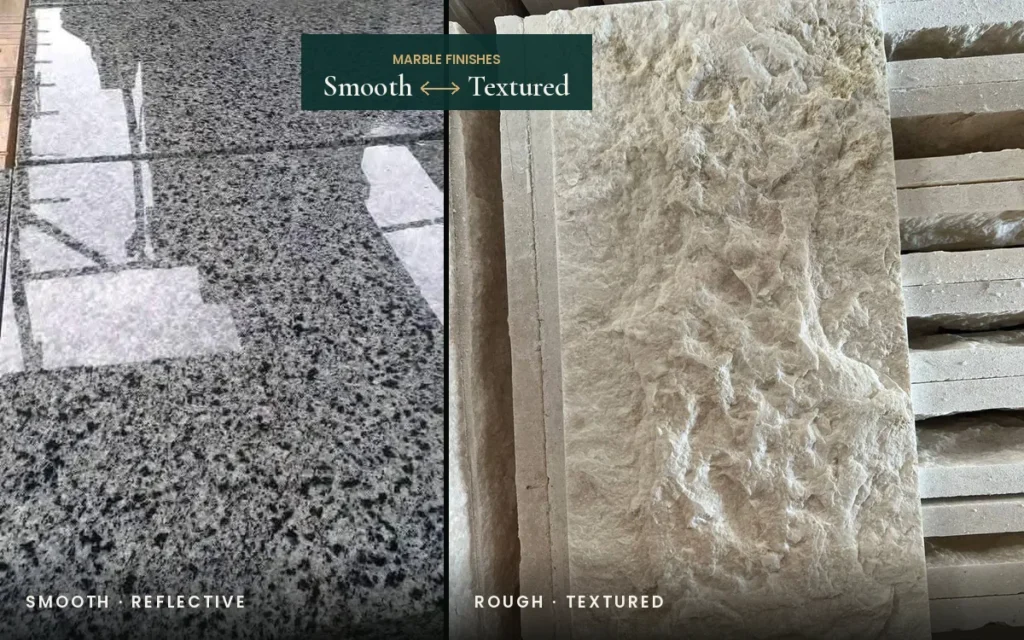
A marble’s finish is the treatment given to its visible face after cutting. It changes how the stone looks, how it feels, how much grip it offers and how wear shows over time. Choosing the finish is therefore as important as choosing the stone. This guide explains ten marble finishes offered on Egyptian marbles such as Galala and Egy Grey, where each one works best and how to specify it in a quotation request.
One point before starting: not every finish is available for every stone or format. Each Beacon Capital material page lists the finishes confirmed for that marble, and final availability is confirmed at quotation stage.
How Marble Finish Changes Appearance
Finishing works by changing the texture of the surface, and texture controls how light reflects from it.
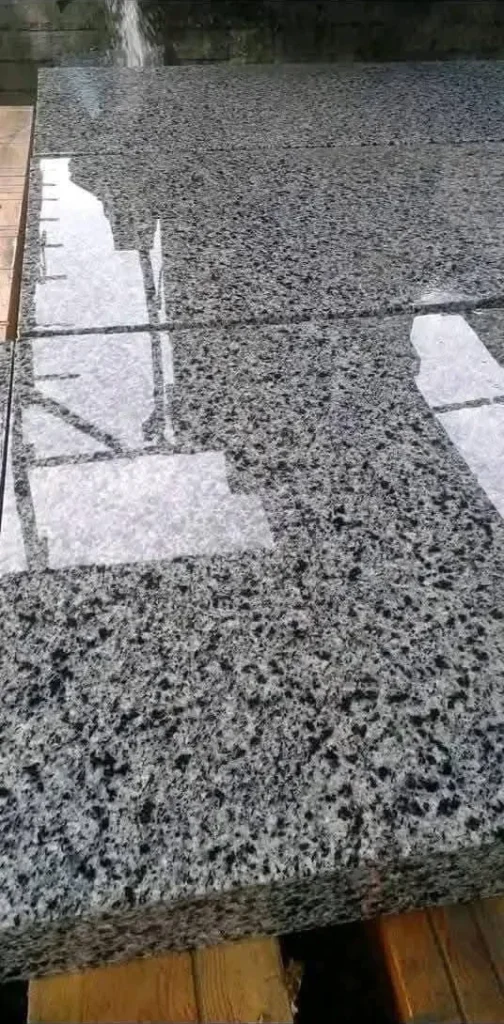
- A smooth, polished surface reflects light directly. Colour looks deeper, veining looks sharper and the stone appears more saturated.
- A smooth but matte surface, such as honed, scatters light evenly. Colour looks softer and lighter, and veining is still visible but less contrasting.
- A textured surface, such as sandblasted or bush-hammered, scatters light in every direction. Colour looks paler and more uniform, and fine veining becomes less distinct.
The result is that one marble can look like several different stones depending on the finish. Always judge colour on a sample in the finish you intend to order.
Marble Finishes at a Glance
| Finish | Surface | Sheen | Typical application |
|---|---|---|---|
| Polished | Smooth | High gloss | Interior floors and feature walls |
| Honed | Smooth | Matte | Floors and countertops |
| Brushed | Softly textured | Low | Floors and wet areas |
| Sandblasted | Fine, even texture | None | Exterior paving and steps |
| Bush-hammered | Pitted, rustic texture | None | Exterior cladding and paving |
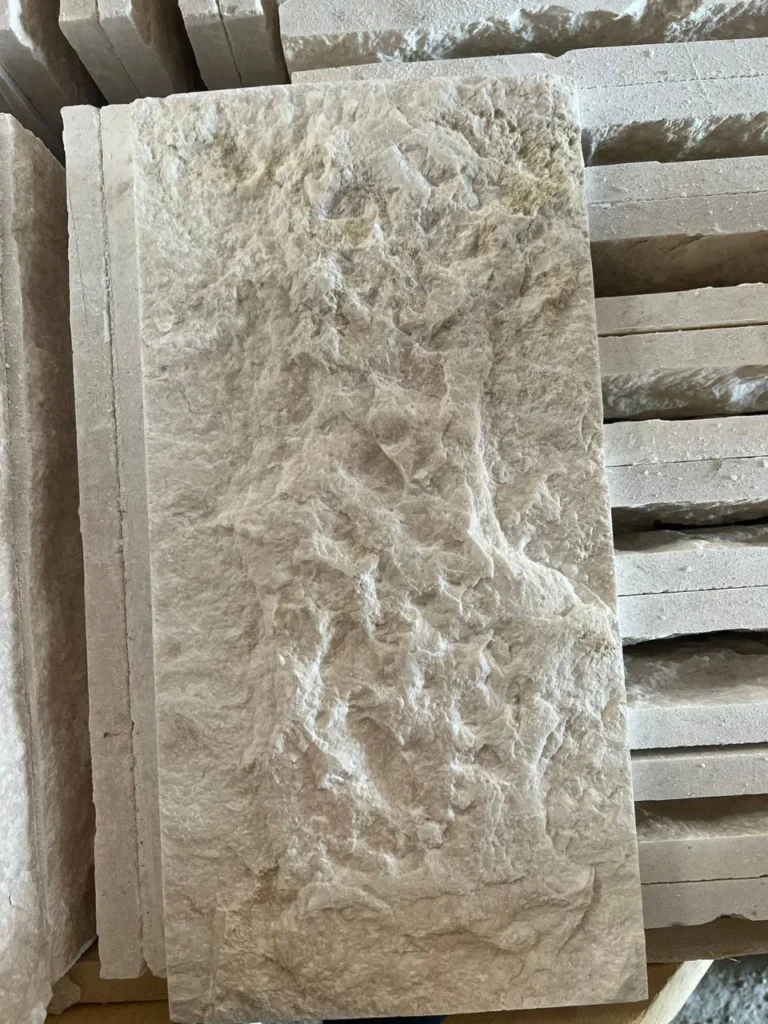
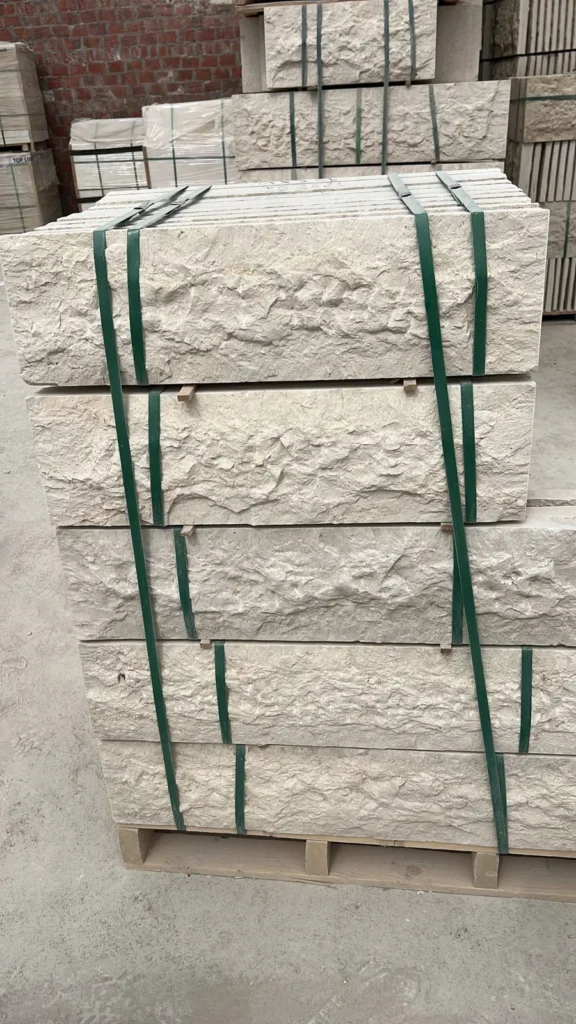
| Split face | Rugged, natural split face | None | Feature walls and facades |
| Rough finish | Natural split texture | None | Cladding and landscaping |
| Antique acid | Softened, aged surface | Low | Classic interiors and walls |
| Leather | Undulating, tactile | Low to satin | Countertops and vanities |
| Flamed | Textured | None | Exterior floors and steps |
The typical applications follow the finish guidance on Beacon Capital’s marble material pages. The finish samples shown below are Galala marble; our Galala marble guide explains how these finishes apply to that stone.
The Ten Finishes Explained
Polished
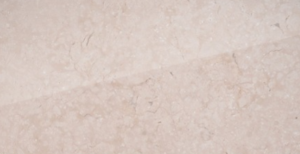
- Appearance: a glossy, reflective surface that shows the stone’s colour and veining at full depth.
- Texture: completely smooth.
- Project consideration: polished marble is slippery when wet, and its gloss shows scratches and dulling from acids more readily than a matte finish. Abrasive cleaners wear the polish away.
- Typical application: interior floors in lower-risk areas, feature walls, reception desks and decorative surfaces.
Honed
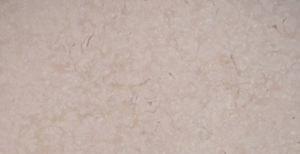
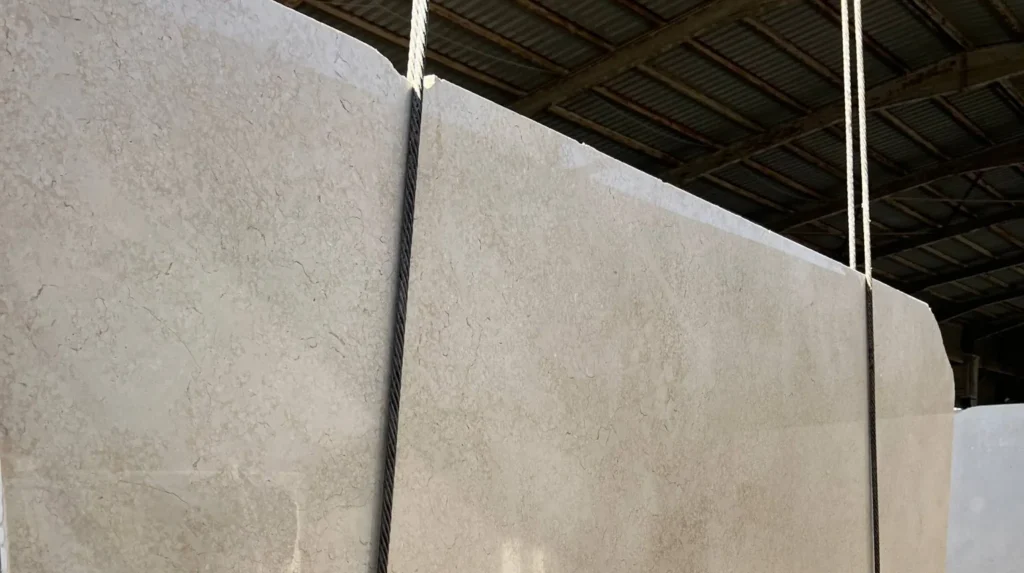
- Appearance: a smooth, matte, non-reflective surface with softer colour than polished.
- Texture: smooth to the touch, without gloss.
- Project consideration: honed marble hides minor wear better than polished, and the Natural Stone Institute’s Use Natural Stone campaign notes that a honed surface can increase slip resistance compared with polished. It is a common choice for busy interior floors.
- Typical application: floors, stairs, countertops and bathroom surfaces.
Brushed
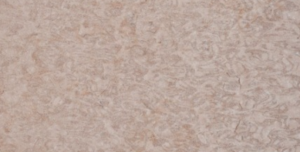
- Appearance: a soft, lightly worn look with muted colour.
- Texture: a gentle, irregular texture created with abrasive brushes, following the natural relief of the stone.
- Project consideration: brushing adds some grip while keeping a refined surface. Textured surfaces can hold dust and dirt more than smooth ones, so plan the cleaning regime.
- Typical application: floors, bathrooms and other wet areas.
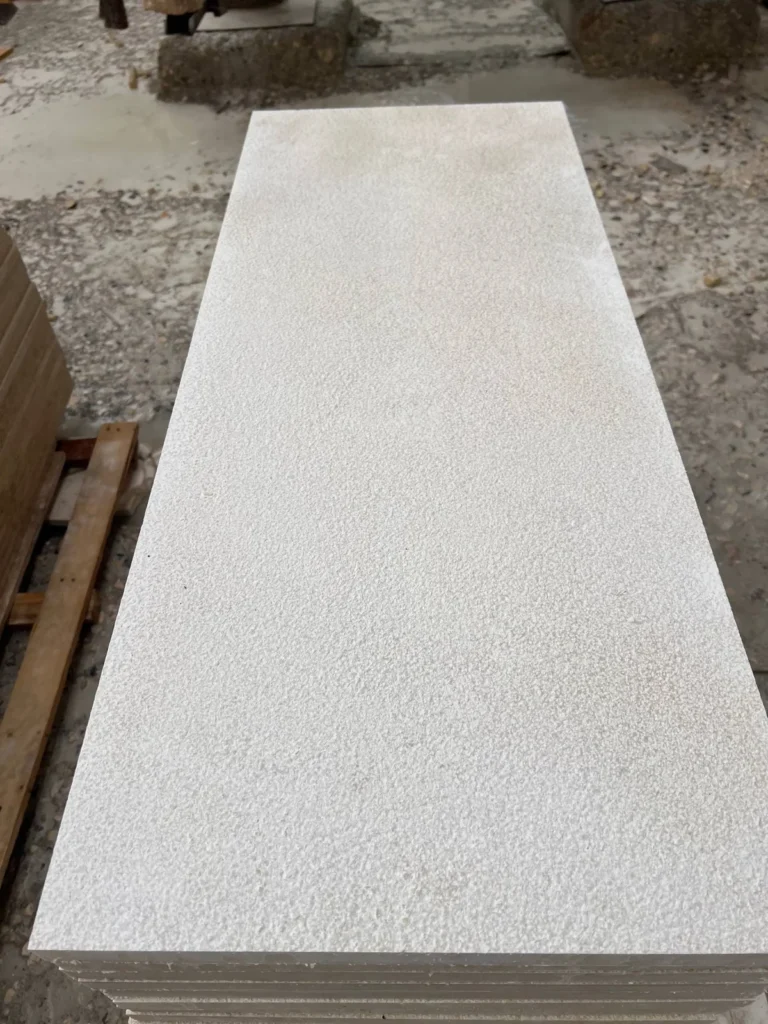
Sandblasted
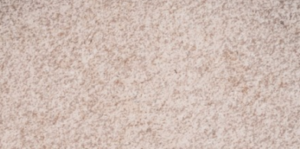
- Appearance: a uniform matte surface with noticeably lighter colour.
- Texture: a fine, even, slightly granular texture produced by blasting the surface with abrasive particles at high pressure.
- Project consideration: sandblasting gives an even texture with added grip. Veining becomes less distinct, so choose it where texture matters more than pattern.
- Typical application: exterior paving, steps and surrounds.
Bush-Hammered
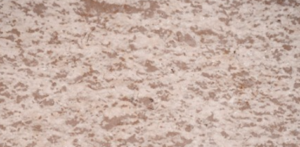
- Appearance: a rustic, pitted surface with pale, even colour.
- Texture: a rough but regular pattern of small indentations made with a multi-pointed impact tool.
- Project consideration: bush-hammering creates a strongly textured surface for grip and a traditional, hand-worked look. Deep texture can collect dirt, so it suits locations where that is acceptable.
- Typical application: exterior cladding, paving and landscape elements.
Split Face
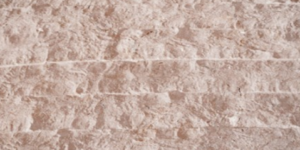
- Appearance: a rugged, three-dimensional natural face.
- Texture: irregular and deeply textured, produced by splitting the stone rather than cutting it.
- Project consideration: split face is used for its shadow and relief. It is generally produced as strips or pieces for walls rather than as large flat slabs, so confirm formats and dimensions with the supplier.
- Typical application: feature walls and facades.
Rough Finish
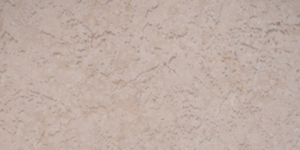
- Appearance: a natural, unrefined surface with a raw, split texture.
- Texture: coarse and uneven.
- Project consideration: a rough finish emphasises the material itself rather than a processed surface. It is chosen for character rather than smoothness, and is not intended for surfaces that need to be flat or easy to clean.
- Typical application: cladding, landscaping and garden features.
Antique Acid
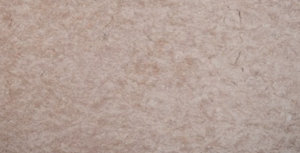
- Appearance: a softened, aged look, as if the stone had been in use for many years.
- Texture: smooth to gently undulating, with slightly rounded detail, typically produced by an acid treatment of the surface.
- Project consideration: the antique effect gives new stone a lived-in character and makes wear less noticeable over time. Confirm the look on a sample, as the result depends on the stone.
- Typical application: classic and traditional interiors, walls and heritage-style schemes.
Leather
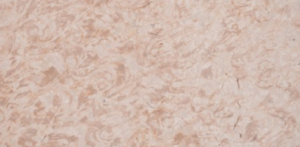
- Appearance: a low-sheen surface that keeps more colour depth than honed.
- Texture: a soft, undulating texture that is pleasant to touch. Use Natural Stone describes leathered stone as bumpy but soft, and resistant to showing scratches, fingerprints and smudges.
- Project consideration: leather is a common compromise on work surfaces: less reflective and more forgiving than polished, with more character than honed.
- Typical application: kitchen countertops, bathroom vanities and tabletops.
Flamed
- Appearance: a weathered, textured surface with muted colour.
- Texture: rough, produced by exposing the surface to a high-temperature flame.
- Project consideration: flaming is most closely associated with granite and other hard stones; Use Natural Stone notes that it works well on sandstone and granite. Suitability for a particular marble should be confirmed with the supplier for that material, format and thickness before specifying it.
- Typical application: exterior floors and steps where grip is required.
Interior vs Exterior Finish Considerations
Interiors. Polished, honed, brushed, leather and antique finishes are the usual choices. Use the level of foot traffic and the risk of water to decide: polished works well on walls, desks and low-risk floors; honed or brushed are safer choices on busy floors and in bathrooms; leather and honed suit work surfaces. See our flooring, bathroom vanities and kitchen countertops pages for how these are applied.
Exteriors. Egyptian marbles are generally recommended for interior use, with selected finishes suited to exterior areas. Outdoors, textured finishes such as sandblasted, bush-hammered and flamed provide the grip that polished stone cannot. Split face and rough finishes are used vertically, on walls and landscape features, rather than as walking surfaces. See outdoor solutions and wall cladding.
Stairs. Steps combine traffic, edges and changes of level. Choose a finish with grip for treads and consider anti-slip detailing, which our staircases work offers on selected materials.
Where slip resistance is a formal requirement, for example in public buildings, specify the required performance and ask whether test data is available for the chosen stone and finish. The finish name alone is not a performance guarantee.
How Finish Affects Colour and Texture
Finish can change the apparent colour of a marble more than buyers expect. Three practical rules:
- Polished is darkest and richest. It shows the true depth of colour and the strongest contrast in the veining.
- Honed and leather are softer. Colour lightens slightly and veining becomes gentler. Leather keeps more depth than honed.
- Textured finishes are palest. Sandblasted, bush-hammered and flamed surfaces look lighter and more uniform, and fine patterns fade.
This is useful in design. Using one marble in two finishes, such as polished on walls and honed on floors, keeps a scheme consistent while giving each surface the right performance. It also matters when matching: a replacement order in a different finish will not look the same as the original, even from the same material. Our guide to choosing Egyptian marble for flooring, stairs and wall cladding looks at how finish and format come together in each application.
The characteristics of each stone still come first. Our guides to Egyptian marble types and Egyptian granite types explain how colour and pattern differ between materials. Egyptian granites in the Beacon Capital collection are offered in polished, and flamed on request.
How to Specify a Finish in an RFQ
Finish is one of the most common sources of misunderstanding in stone orders. To avoid it:
- Name the finish for each item separately. A project may need polished walls, honed floors and sandblasted exterior steps in the same stone.
- State where each item will be installed, indoors or outdoors, and whether it is a walking surface.
- Reference an approved sample if the appearance must match a design board or an earlier order.
- Include edge finishing for countertops, stair nosings and exposed edges, since edges may need to match the face finish.
- List any performance requirements, such as slip resistance, and ask for data for the specific material and finish.
- Confirm availability for the chosen stone, format and thickness before the order is finalised.
For the full sourcing process, from specification to shipping documents, see how to import marble from Egypt.
Choose Your Marble and Finish
Finish options for each stone are listed on its page in the Egyptian Marble Collection. For fabricated elements such as stairs, vanities and cladding panels, see custom stone fabrication.
When you know the stone, finish, dimensions and quantity, send them through Request a Quote and our team will confirm availability and prepare a quotation.
Planning a project with these materials? Our Egyptian Marble Collection page lists each stone's finishes, formats and applications.
Need this specified for a project?
Share your material, finish, dimensions and destination. Our team will confirm availability and prepare a quotation.
Request a Quote