Sourcing & Buying
How to Choose an Egyptian Marble & Granite Supplier: Importer Checklist
A practical checklist for evaluating natural stone suppliers in Egypt: materials, selection, fabrication, quality control, packing, Incoterms, quotation scope and documentation, plus the red flags to look out for.
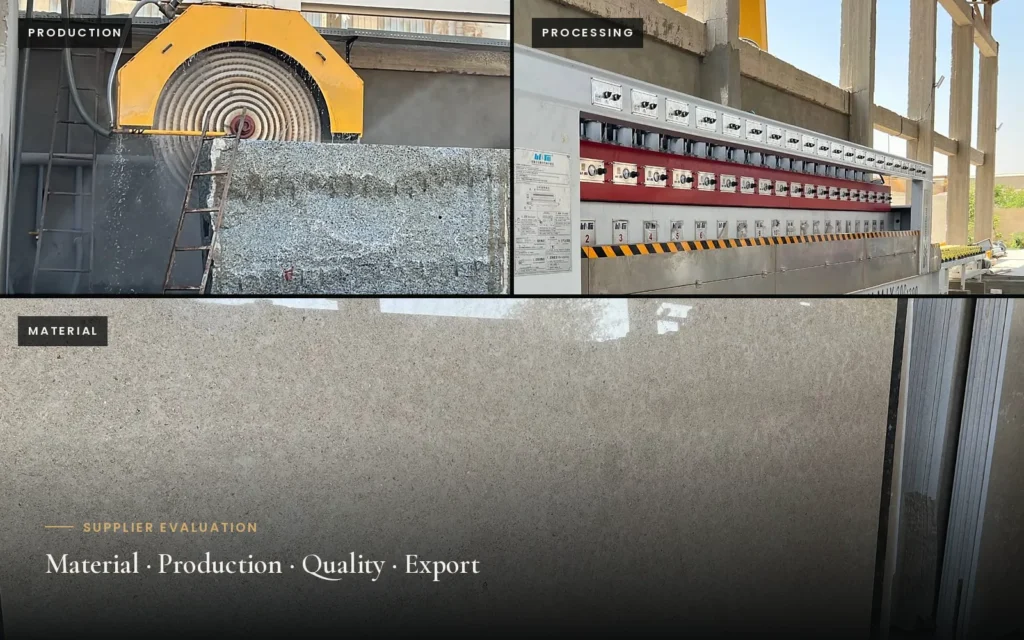
Egypt has a large natural stone industry, and an importer looking for marble or granite will usually find several suppliers able to quote. The hard part is comparing them fairly. This guide sets out a practical way to evaluate a stone supplier in Egypt, what to ask at each stage, and which warning signs deserve a closer look. It is written for importers, distributors, contractors and project buyers, whichever supplier they end up choosing.
Start With the Stone, Not the Supplier Claim
Supplier websites and brochures tend to sound alike. A clear specification gives you something objective to compare them against. Before contacting suppliers, define:
- Material: the stone you want, or the colour family and a reference image.
- Colour: how much variation the design can accept.
- Format: slabs, tiles or cut-to-size pieces.
- Finish: polished, honed, brushed or another finish, for each item.
- Quantity: in square metres, linear metres or pieces.
- Application: floors, walls, stairs, vanities or counters, interior or exterior.
- Destination: the port or country the stone will be shipped to.
Send the same specification to every supplier. Quotations built on the same brief can be compared line by line. Quotations built on different assumptions cannot.
1. Check Whether the Supplier Offers the Required Materials
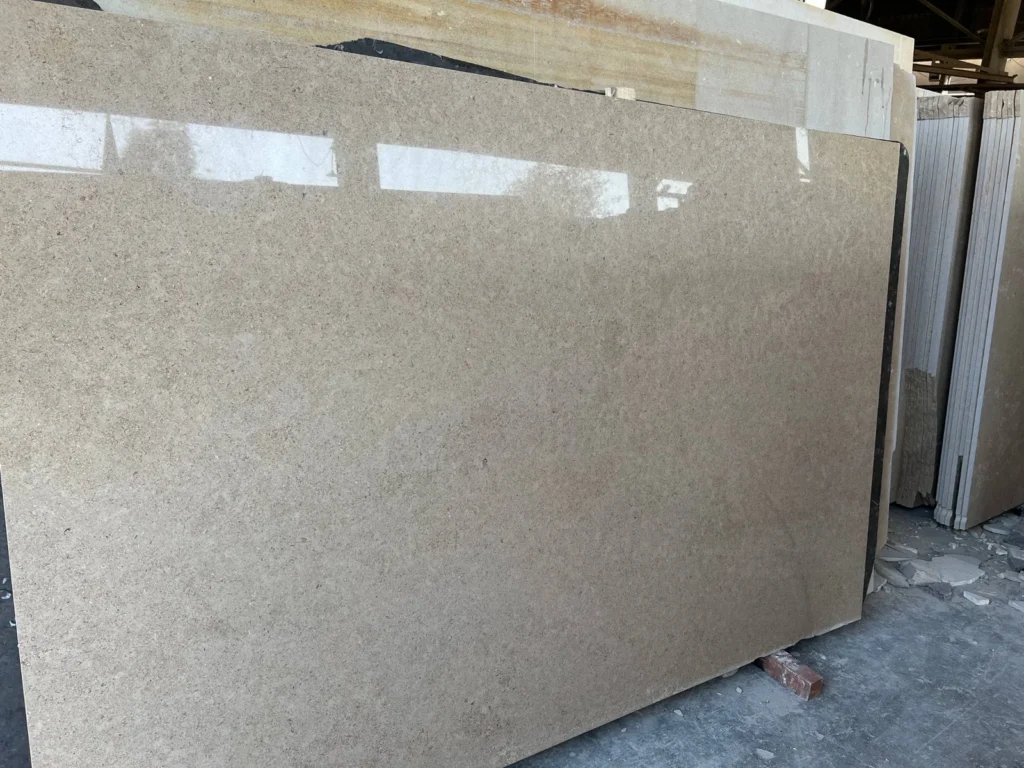
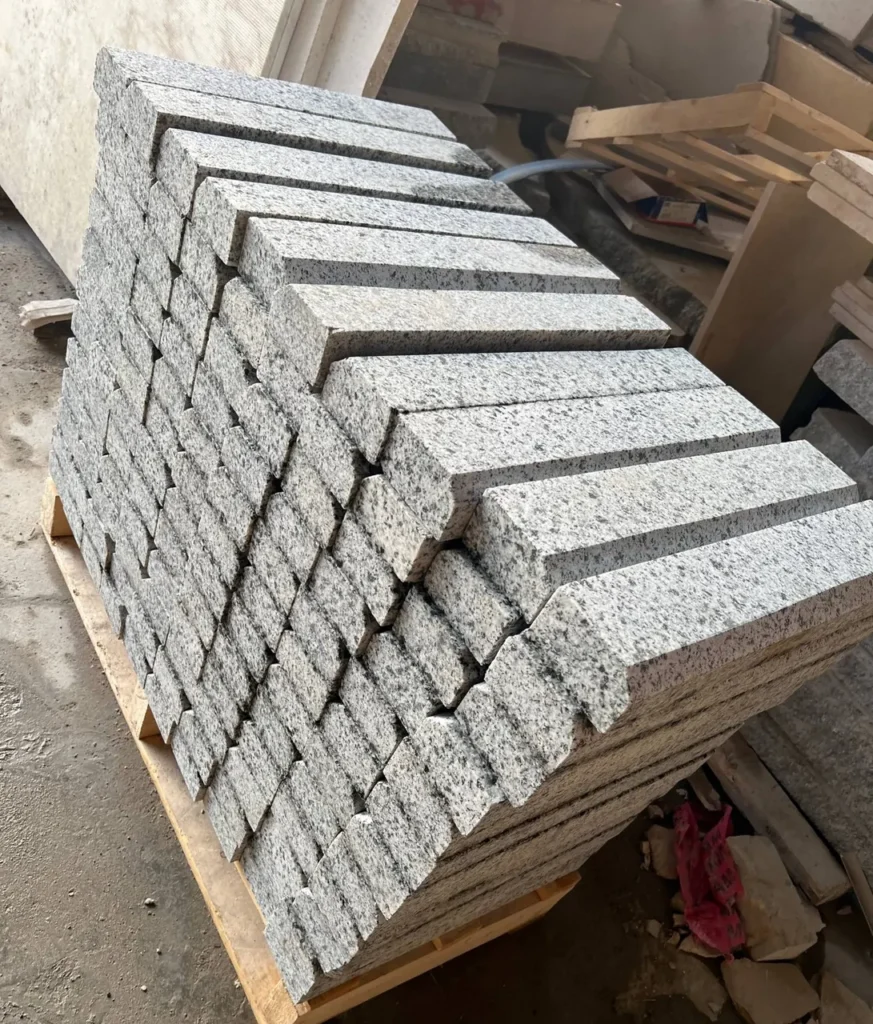
Confirm that the supplier actually lists the stone you need, and ask what information is available for it: finishes, formats, thicknesses and typical applications. A supplier’s catalogue shows which materials it works with regularly. Beacon Capital’s range, for example, is set out in the Egyptian Marble Collection and the Egyptian Granite Collection, with a page for each stone.
If a supplier offers a stone you have not seen before, ask for its exact name and a sample or reference. Trade names are not always consistent between suppliers, so the same name should not be assumed to mean the same stone.
2. Ask How Material Selection Is Managed
Selection has a large effect on how the finished project looks. Useful questions include:
- Visual selection: who selects the blocks or slabs for your order, and on what basis?
- Consistency: how does the supplier keep colour and pattern consistent across a large order, or match an earlier delivery?
- Approved references: what reference will production be checked against: a sample, photographs of the actual material, or an inspection?
- Communication: will you be told before production if the available material differs from the reference?
Suppliers are organised in different ways. Some own quarries or factories. Others work through production partners or trading networks. Ownership alone does not tell you how well selection is managed. What matters is whether the supplier can explain the process clearly and put the agreed approval steps in writing.
3. Review Fabrication Capabilities
If your order goes beyond standard tiles or slabs, check that the supplier can produce the formats you need, and ask how drawings are reviewed before production. Depending on the project, that may include:
- slabs for fabrication at the destination;
- tiles in standard or project-specific sizes;
- cut-to-size pieces produced to approved drawings;
- stair treads, risers and landings;
- vanity tops, kitchen countertops and reception counters;
- wall and cladding panels.
For fabricated pieces, ask which edge profiles and cutouts can be produced, and how the drawing or cutting schedule will be confirmed before cutting starts. Beacon Capital’s fabrication formats are listed on the Stone Solutions page.
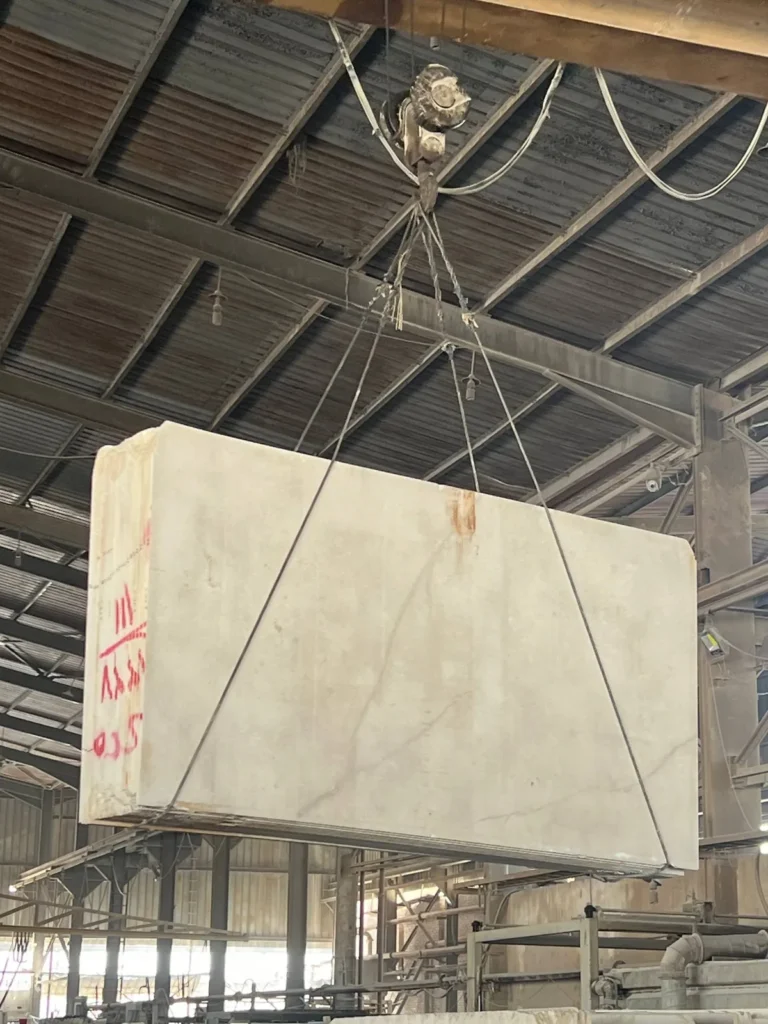
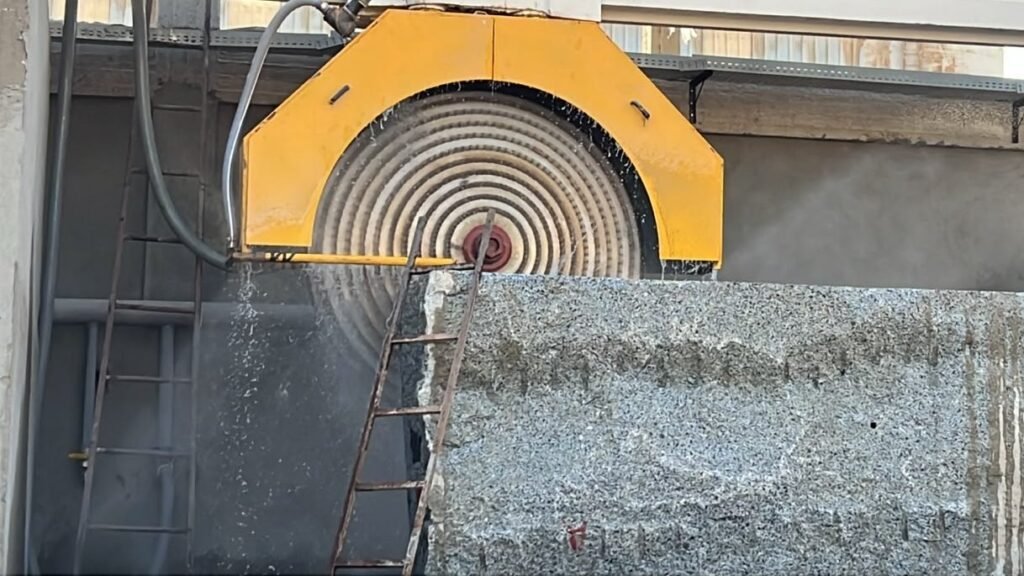
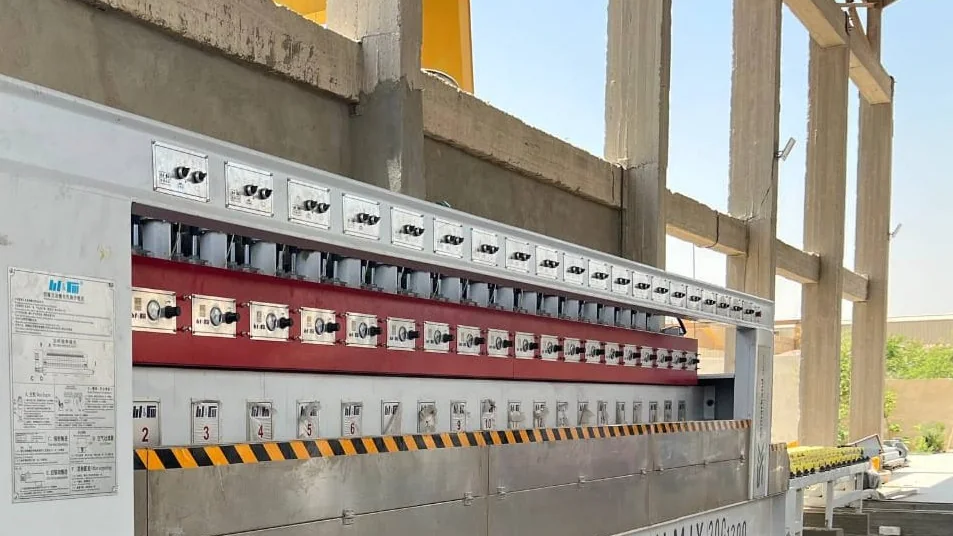
4. Ask About Quality-Control Process
Ask what is checked, at which stage, and how the results are recorded. A clear answer covers dimensions, thickness, finish, appearance against the approved reference, and packing. Ask too how you can take part: through an inspection visit, an appointed inspector or photographs of the actual material.
Our pre-shipment marble inspection checklist explains what a buyer should review before stone is packed. Beacon Capital’s own quality-control stages are described on the Factory & Quality page.
5. Review Packing and Export Preparation
Stone that is well produced but poorly packed can still arrive damaged. Ask how each format will be packed, how finished faces and edges are protected, how crates will be marked, and whether wood packaging will meet your country’s requirements. Our guide to how marble and granite are packed for international shipping explains what to look for.
6. Clarify Incoterms
Make sure each quotation states its delivery term and the named port or place, for example FOB followed by the named port of shipment, or CIF followed by the named port of destination. The term decides who arranges freight and insurance and where risk passes. Our comparison of FOB vs CFR vs CIF explains the differences.
7. Confirm What Is Included in the Quotation
Two prices for “the same stone” can differ because they cover different things. Check that each quotation states:
| Item | What to confirm |
|---|---|
| Material | The exact stone name |
| Dimensions | Sizes for each item, or reference to the drawings |
| Thickness | For each item |
| Finish | For each item and each face where relevant |
| Fabrication | Edge profiles, cutouts and other details |
| Packing | The packing method for each format |
| Incoterm | The delivery term and its version |
| Named port or place | The port of shipment or destination the price applies to |
| Documentation | Which export documents are included |
| Validity | How long the price is valid |
If an item is missing, ask for it to be added in writing rather than assuming it is included.
8. Evaluate Communication and Documentation
How a supplier handles the enquiry stage is a useful indication of how the order will be handled. Look for answers that address your specification point by point, questions that show the supplier has read your drawings, and consistent details across quotation, pro-forma invoice and later documents. Ask who will be your contact during production and shipment, and how changes will be confirmed.
Documentation matters at the other end too. Commercial invoice, packing list and bill of lading need to agree with each other for customs clearance. Our guide on how to import marble from Egypt lists the common export documents.
9. Ask for Relevant Material References
You do not need confidential customer names to evaluate a supplier. More useful references are:
- Product images of the material you are considering, in the finish you need.
- A sample or reference of the stone, to check colour and character.
- Packing examples, such as photographs of how similar orders were crated.
- Project or application references, where the supplier is able to share them.
Treat any reference as an indication rather than a guarantee. A sample is a small piece of natural stone, and an image depends on lighting and screen settings.
Red Flags When Evaluating a Stone Supplier
None of these automatically disqualifies a supplier, but each deserves a clear answer before you place an order:
- Unclear material identity: a stone offered under a vague name, or a name that changes between documents.
- Unexplained substitutions: a different material or selection proposed late, without a reason or a new reference.
- Incomplete quotations: prices without dimensions, thickness or finish.
- Unclear delivery terms: an Incoterm without a named port or place, or no Incoterm at all.
- Unsupported technical claims: performance figures offered without test reports for the actual material.
- Inconsistent documentation: quantities, weights or descriptions that differ between documents.
Importer Supplier-Evaluation Checklist
| Area | What to ask | A clear answer includes |
|---|---|---|
| Materials | Do you supply this exact stone? | Exact name, finishes, formats and a sample or reference |
| Selection | How is material selected for my order? | A described process and an agreed approval method |
| Fabrication | Can you produce these pieces? | Drawing review, edge profiles and cutouts confirmed |
| Quality control | What is checked before packing? | Dimensions, thickness, finish, appearance and packing |
| Packing | How will each format be packed? | Method per format, marking and wood-packaging compliance |
| Incoterms | Which term and named place is quoted? | A stated Incoterm and named port or place |
| Quotation | What does the price include? | Material, dimensions, thickness, finish, packing, documents and validity |
| Documents | Which export documents do you prepare? | A list agreed at order stage |
| Communication | Who is my contact during the order? | A named contact and a way of confirming changes |
Discuss Your Stone Requirements With Beacon Capital
Beacon Capital is one of the suppliers you can include in your comparison. Beacon Capital works through a strategic production partnership in Egypt and supplies Egyptian marble and granite as slabs, tiles and cut-to-size pieces, with export packing and documentation support. To receive a quotation you can compare against others, send your specification through Request a Quote.
Need this specified for a project?
Share your material, finish, dimensions and destination. Our team will confirm availability and prepare a quotation.
Request a Quote