Export & Logistics
FOB vs CFR vs CIF When Importing Marble from Egypt
What FOB, CFR and CIF mean under Incoterms® 2020, where risk passes, who arranges freight and insurance, and what to state when requesting a stone export quotation.
When an importer asks for a price on Egyptian marble or granite, one of the first questions is which delivery term the quotation should use. FOB, CFR and CIF are the three terms Beacon Capital quotes on request for sea shipments from Egypt, and they are easy to confuse because the differences are not only about who pays. This guide explains what each term means under the ICC’s Incoterms® 2020 rules, how they compare, and what to state in a request for quotation. It is general guidance, not legal advice.
What Incoterms Define
The Incoterms® rules are published by the International Chamber of Commerce (ICC). According to the ICC’s introduction to Incoterms® 2020, each rule describes three things:
- Obligations: who does what between seller and buyer, such as who arranges carriage or insurance and who handles export and import clearance.
- Risk: where and when the seller “delivers” the goods, which is the point at which risk of loss or damage passes to the buyer.
- Costs: which party pays for which part of the journey.
Just as important is what Incoterms do not do. The ICC is explicit that the rules are not in themselves a contract of sale. They do not set the price, the method, time or currency of payment, or the point at which ownership of the goods passes to the buyer. The International Trade Administration adds that they do not specify which documents the seller must provide, and do not deal with liability if the goods do not conform to the contract. All of those belong in the sales contract.
FOB, CFR and CIF belong to the group of Incoterms rules designed for sea and inland waterway transport, alongside FAS.
What Does FOB Mean?
FOB (Free On Board) is followed by the named port of shipment, for example “FOB [Egyptian port], Incoterms® 2020”.
- Delivery and risk. The seller delivers when the goods are placed on board the vessel nominated by the buyer at the named port of shipment. Risk passes to the buyer at that point.
- Carriage. The buyer contracts and pays for the main sea freight.
- Insurance. The rule does not oblige either party to insure. Because the buyer carries the risk from the moment the goods are on board, the buyer normally arranges its own cargo insurance.
- Clearance. The seller handles export clearance; the buyer handles import clearance at destination.
FOB suits buyers who have their own freight forwarder or shipping contracts and want control over the shipping line, routing and freight cost.
What Does CFR Mean?
CFR (Cost and Freight) is followed by the named port of destination, for example “CFR [destination port], Incoterms® 2020”.
- Delivery and risk. The seller delivers when the goods are placed on board the vessel at the port of shipment. Risk passes to the buyer there, not at the destination port.
- Carriage. The seller contracts and pays for carriage to the named port of destination.
- Insurance. Neither party is obliged to insure. Since the risk has passed at loading, the buyer normally arranges insurance for the sea journey.
- Destination costs. Costs at the port of destination, such as unloading, are generally for the buyer’s account unless the seller’s contract of carriage includes them.
This point is easy to misunderstand. As the ICC explains, under the C rules the named destination is never the place of delivery: the seller pays for carriage to the destination, but risk has already transferred at shipment. If the stone is damaged at sea, it is the buyer who must claim.
What Does CIF Mean?
CIF (Cost, Insurance and Freight) is also followed by the named port of destination.
CIF works like CFR, with one addition: the seller must also obtain cargo insurance for the buyer’s benefit covering the goods during carriage.
- Delivery and risk. Exactly as CFR: delivery, and the transfer of risk, happen when the goods are on board the vessel at the port of shipment.
- Carriage. The seller contracts and pays for carriage to the named port of destination.
- Insurance. The seller obtains insurance. Under Incoterms® 2020, the ICC keeps Institute Cargo Clauses (C) as the default minimum level of cover for CIF, and the parties can agree a higher level.
Cover under Institute Cargo Clauses (C) is limited. For high-value stone, a buyer may prefer to negotiate a higher level of cover under CIF, or to buy on CFR and arrange its own broader insurance.
FOB vs CFR vs CIF Comparison Table
| Term | Seller arranges ocean freight? | Seller arranges insurance? | Risk-transfer point | Buyer considerations |
|---|---|---|---|---|
| FOB | No, the buyer contracts carriage | No obligation on either party | Goods on board the vessel at the named port of shipment | Most control over shipping; buyer books freight and insures |
| CFR | Yes, to the named port of destination | No obligation on either party | Goods on board the vessel at the port of shipment | Seller books freight, but buyer carries sea risk and should insure |
| CIF | Yes, to the named port of destination | Yes, minimum cover (Institute Cargo Clauses (C)) unless a higher level is agreed | Goods on board the vessel at the port of shipment | Seller books freight and insurance; check the level of cover |
Under all three, risk passes at the port of loading in Egypt. The differences are about who arranges and pays for freight and insurance, not where the risk passes.
Which Term Should a Marble Importer Discuss?
No term is best for every buyer. The right choice depends on your circumstances:
- Freight arrangements. If you already work with a forwarder or have contract rates with shipping lines, FOB lets you use them. If you do not, CFR or CIF lets the seller arrange the freight.
- Insurance. Under FOB and CFR, arranging insurance is your decision and your responsibility. Under CIF, check whether the minimum cover is enough for the value of the stone.
- Logistics control. FOB gives the buyer control over the carrier, routing and timing of the main voyage. Under CFR and CIF, the seller chooses the carrier.
- Destination. Port costs, local clearance practice and onward transport from the port affect the total landed cost under every term.
- Contractual preferences. Your bank, your insurer or your own internal policies may prefer one term over another, particularly where letters of credit are involved.
Beacon Capital provides quotations on FOB, CFR or CIF terms on request, as noted on our Export & Logistics page.
Containerized Stone and Incoterm Considerations
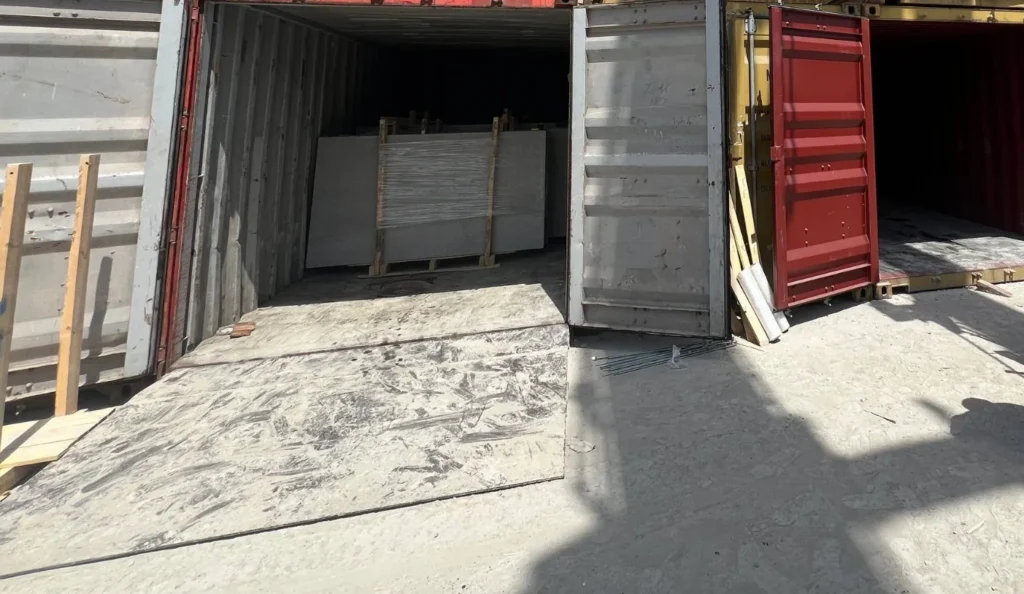
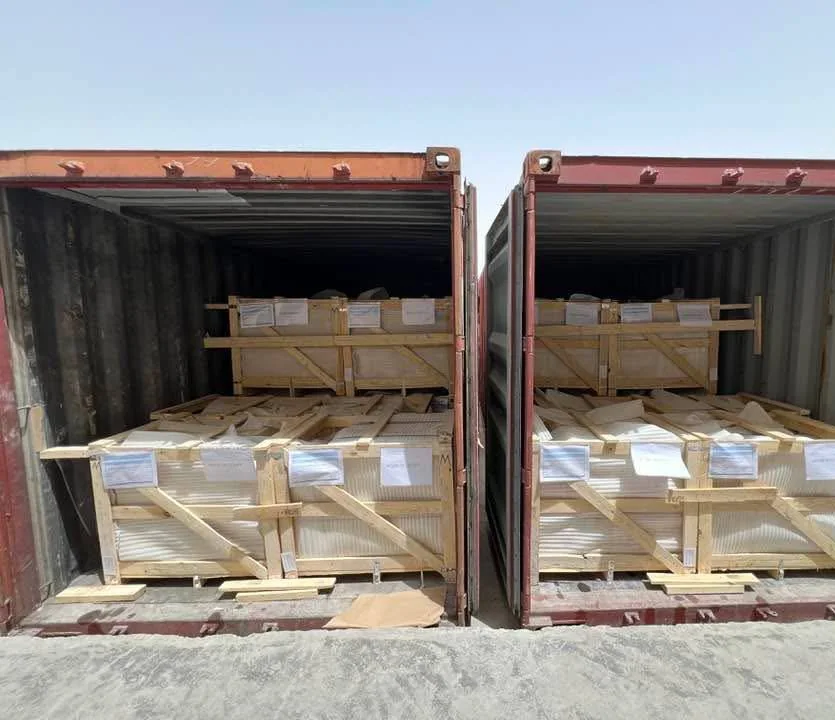
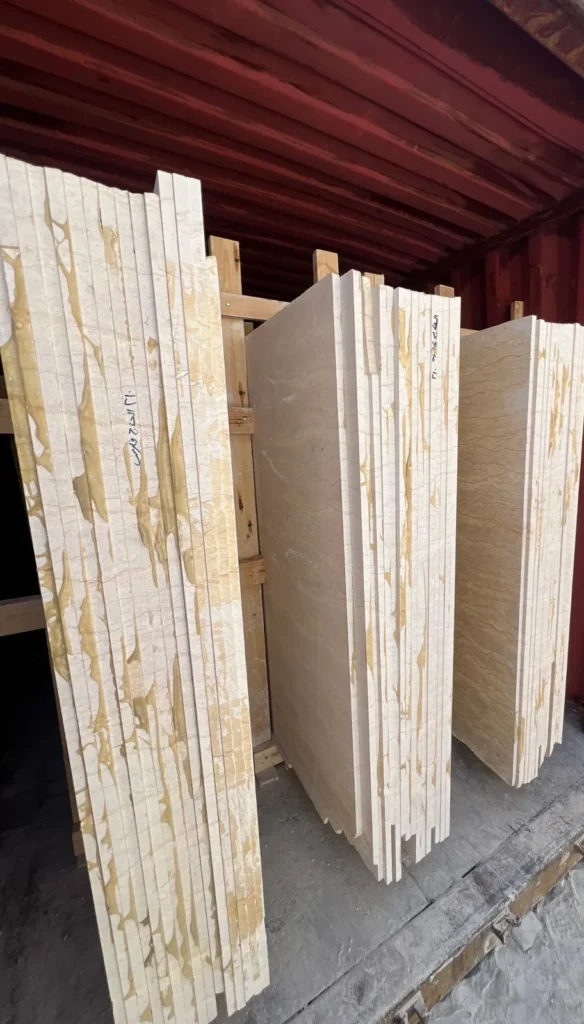
Stone orders are frequently shipped in containers, and this raises a point the ICC itself highlights. In its introduction to Incoterms® 2020, the ICC notes that where containerised goods are handed over to a carrier before they are loaded on board, typically at a container terminal, the seller is well advised to sell on FCA terms rather than FOB.
In practical terms, FOB is built around delivery on board the vessel. If the seller has handed the container over at the terminal, it has lost control of the goods before the point at which FOB says risk passes.
This is general Incoterms guidance from the ICC, not a Beacon Capital policy statement. Whether FCA, FOB or another term suits a particular shipment is a matter to agree in the sales contract, ideally with advice from your freight forwarder.
What to State in an RFQ
To receive a comparable quotation, state clearly:
- The Incoterm and version, for example “CIF, Incoterms® 2020”.
- The named port or place: the port of shipment for FOB, or the port of destination for CFR and CIF.
- The final destination, if different from the port.
- Material, for example Galala marble or Black Aswan granite.
- Quantity in square metres, linear metres or pieces.
- Dimensions and thickness for each item.
- Finish for each item.
- Insurance requirement, if you want a level of cover above the CIF minimum.
A quotation that states only “CIF” without a named port cannot be compared with another supplier’s, because the freight element depends on the destination.
Requesting a Stone Export Quotation
For the full import process, from specification and samples to quality control and documents, read how to import marble from Egypt. To understand how the stone is prepared for the voyage, see how marble and granite are packed for international shipping. Beacon Capital’s export workflow and documentation support are set out on the Export & Logistics page.
When you are ready, send your material, quantity, dimensions, finish, destination and preferred delivery term through Request a Quote.
Need this specified for a project?
Share your material, finish, dimensions and destination. Our team will confirm availability and prepare a quotation.
Request a Quote