Materials
Galala vs Galala Extra: What’s the Difference?
An evidence-based comparison of Galala and Galala Extra: what the published specifications share, where they differ visually, and how to compare samples before choosing.
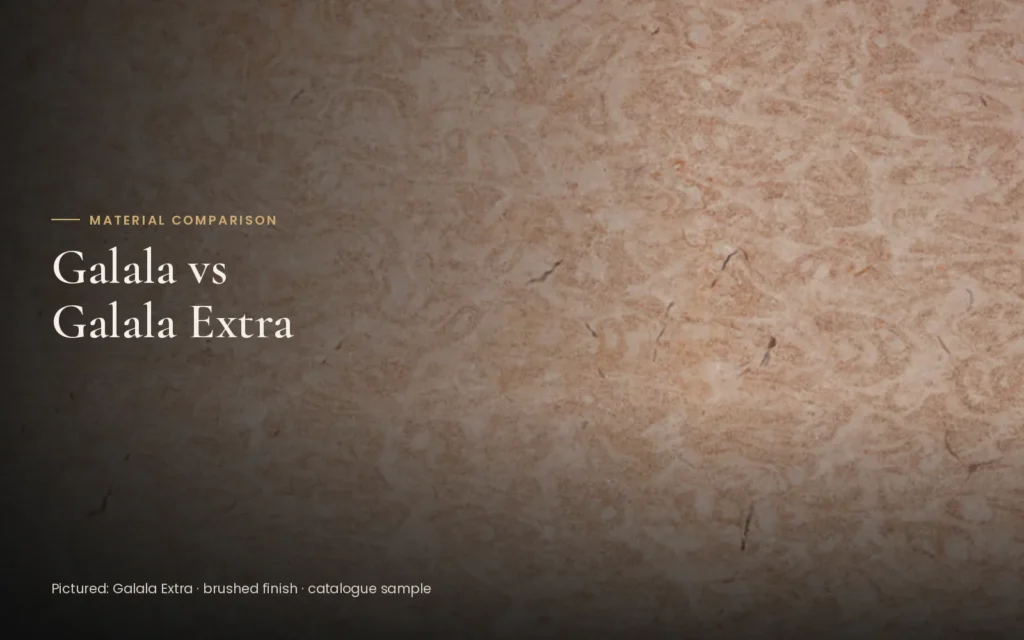
Galala and Galala Extra share a name, a colour family and most of their published specification, so it is reasonable to ask what actually separates them. This comparison sticks to what Beacon Capital’s material pages and approved images show. Where the two are the same, we say so. Where the only difference published is visual, we say that too, rather than inventing technical distinctions the evidence does not support.
Galala and Galala Extra at a Glance
The table compares the two materials using only attributes published on the Galala and Galala Extra material pages.
| Attribute | Galala | Galala Extra |
|---|---|---|
| Colour family | Warm beige | Light beige |
| Visual character | Soft, natural fossil movement and a calm, even tone | Refined tone, more uniform appearance, subtle natural movement |
| Short description | A warm Egyptian beige marble with soft fossil movement | A whiter, more uniform grade of Galala beige |
| Supply formats | Slabs, tiles, cut-to-size | Slabs, tiles, cut-to-size |
| Standard thicknesses | 20 mm and 30 mm | 20 mm and 30 mm |
| Finishes listed | Ten | Ten (the same ten) |
| Recommended use | Interior and selected exterior | Interior and selected exterior |
| Application areas listed | Staircases, reception counters, flooring, wall cladding, bathroom vanities, hotel lobbies | The same six |
The pattern is clear. On format, thickness, finish range, recommended use and application areas, the published specifications are the same. The published difference is in colour and visual character: Galala Extra is presented as the lighter, more uniform of the two, and Galala as the warmer stone with more visible fossil movement.
This comparison does not cover technical performance. If your project needs physical property data for either stone, ask for it for the specific material; do not assume the two are interchangeable, or different, on performance.
Galala Marble Appearance
Galala is a warm beige marble. Its surface carries soft fossil movement: small fossil fragments and gentle natural marks spread across the stone, rather than strong veins. The overall impression is calm and even, with enough surface detail to give the stone depth up close.
The warmth is the defining feature: of the two stones, Galala is the warmer beige. More detail on its uses and finishes is in our Galala marble buyer guide.
Galala Extra Appearance
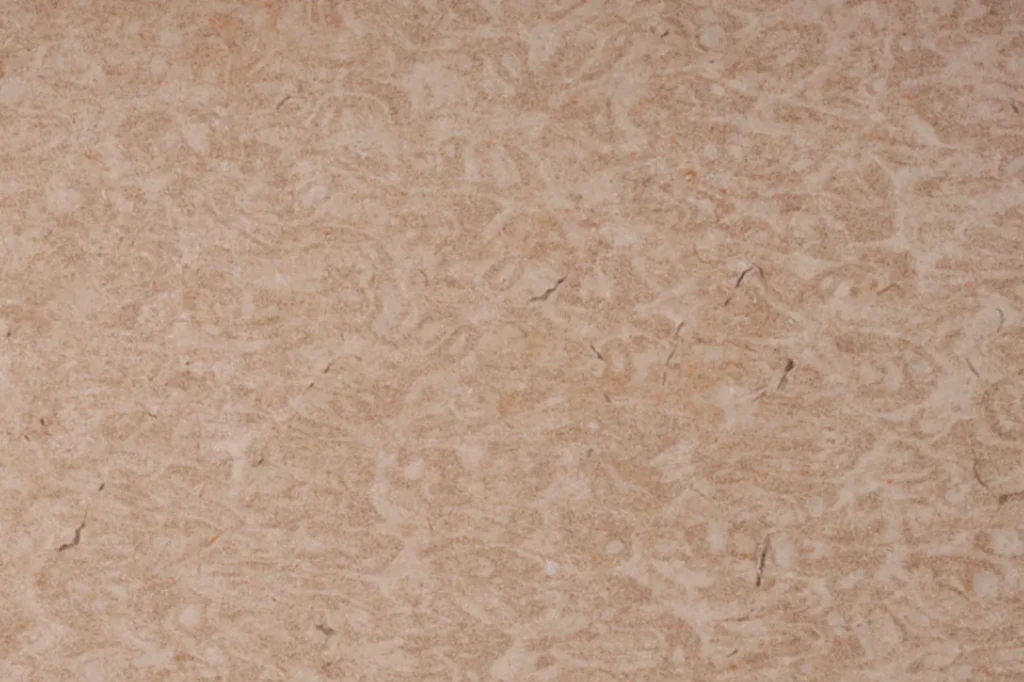
Galala Extra is described as a premium light-beige marble with a refined tone and a more uniform appearance, with subtle natural movement. Its material page notes a more uniform visual character across larger areas, and the Galala page describes it as a whiter, more uniform grade of Galala beige.
In other words, Galala Extra is positioned as the lighter, quieter version of the same colour story. The image at the top of this article shows Galala Extra in a polished finish.
How the Two Compare Visually
Based on the published descriptions and approved images, the practical differences are:
- Tone. Galala is warmer. Galala Extra is lighter and described as whiter.
- Uniformity. Galala Extra is described as more uniform across larger areas. Galala shows more visible fossil movement.
- Surface detail. Both show natural movement; in Galala it is more noticeable, and in Galala Extra it is described as subtle.
Two cautions apply to any visual comparison:
- Photographs are not reliable enough to decide. The images of the two stones, here and on the material pages, are separate photographs that can differ in lighting, camera settings and finish. Screen settings change colour again. Use them to understand the general character of each stone, not to judge exactly how far apart they are.
- Both are natural stones. Colour, fossils and movement vary between quarry blocks and production batches within each material. A light batch of Galala and a warmer batch of Galala Extra can sit closer together than the descriptions suggest.
For these reasons, the decision between the two should be made on physical samples in the same finish, viewed side by side.
Which One Fits Different Design Directions?
Because the published specifications are otherwise the same, the choice is mainly aesthetic:
- Galala may suit schemes that want warmth and visible natural character, where fossil texture is welcome. Its material page describes it as complementing both classic and contemporary interiors.
- Galala Extra can be considered for schemes that want a lighter, calmer and more uniform surface, particularly across large floor or wall areas where consistency matters, or where the palette is built around pale neutrals.
- Both can be considered for the same six application areas listed on their pages: staircases, reception counters, flooring, wall cladding, bathroom vanities and hotel lobbies.
The two can also be combined deliberately, for example Galala Extra for the main floor field and Galala for borders or feature areas. If you do this, specify which stone goes where, so the two are never mixed by accident.
Finish Considerations
Both stones are listed with the same ten finishes, from polished and honed to textured exterior finishes such as sandblasted, bush-hammered and flamed. Two points matter when comparing them:
- Compare like with like. Finish changes apparent colour. Polished deepens and warms a beige marble; honed and textured finishes make it paler and more uniform. A polished Galala next to a honed Galala Extra will exaggerate the difference.
- Choose the finish for the location first. A textured finish may narrow the visual gap between the two, because texture tends to make both look lighter and fine detail less distinct.
Our marble finishes guide explains how each finish affects colour and texture.
How to Compare Samples or Production Selection
Samples are available on request for both materials. To make the comparison useful:
- Request both stones in the same finish and thickness, ideally the finish you intend to use.
- View them side by side, in daylight and under lighting similar to the finished space.
- Look at more than one piece where possible, to see the range of variation within each material rather than a single example.
- For large orders, agree how production material will be approved before production begins, for example against a reference sample or photographs of the material allocated to your order.
Whatever reference you approve, keep it. It becomes the benchmark for the order and for any future repeat order.
What Buyers Should Specify in an RFQ
When requesting a quotation for either stone, state:
- The material: Galala or Galala Extra, not “Galala” as a general name for both.
- The reference the stone must match, if any: an approved sample or an earlier order.
- Format: slabs, tiles or cut-to-size pieces.
- Dimensions and thickness for each item.
- Finish for each item and where it will be installed.
- Quantity per item, so material can be selected for consistency.
- Drawings for stairs, vanities, counters and cladding panels.
- Destination and preferred delivery term.
For the full buying process, see how to import marble from Egypt.
Explore Galala and Galala Extra
Compare the full specifications on the Galala and Galala Extra material pages, or browse the Egyptian Marble Collection. When you have decided, or want samples of both, send your requirements through Request a Quote.
Need this specified for a project?
Share your material, finish, dimensions and destination. Our team will confirm availability and prepare a quotation.
Request a Quote